 Sorta
US + Canada
Plant It and Forget It (Almost): Garlic Before Freeze-Up
Bury it in fall, walk away, come back in July to find it multiplied. Here's whether you're too late, and how to plant garlic right.
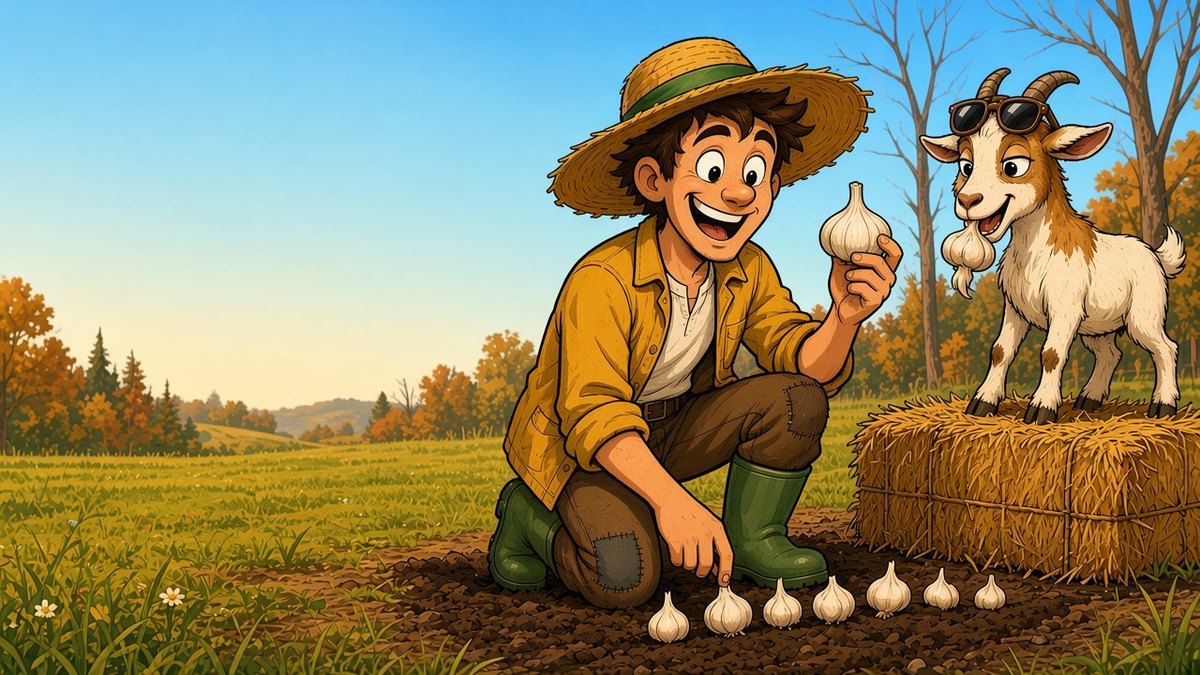
Garlic is the only crop where the instructions are basically: bury it in the fall, walk away, and come back in July to find it has multiplied. It's less gardening and more a very slow magic trick.
The surprising part is that garlic actually needs winter. A cold spell is what tells each clove to split into a whole new head. Skip the cold and you tend to get one sad round bulb instead.
If you haven't planted yours yet, there may still be time. Here's how to tell, and how to do it right.
Is it too late?
The goal is roots before the ground freezes, but not much leafy growth. That's why the classic advice is to plant after the soil cools in fall, around one to three weeks after the first killing frost in colder places. A soil temperature of about 50°F (10°C) at 4 inches (10 cm) deep is a good sign.
Timing shifts a lot by region:
- Northern US states: roughly October to early November in many areas; plant before the ground freezes.
- Milder US regions: often into November.
- Ontario: recent provincial trials found earlier planting, from late August into September, gave better roots, fewer heaved cloves and bigger yields than late planting. If you're planting now, plant a little deeper.
- Alberta and the Prairies: the provincial guide puts fall planting from late August to mid-September, timed by your average first fall frost.
So if you're on the Prairies and the ground is already freezing, a fall planting is a gamble. You can plant in very early spring instead (in Alberta, before the end of April), but expect smaller bulbs.
Pick the right garlic
Skip the grocery store bulbs. Much of it is softneck garlic grown in mild climates, and it often doesn't do well in cold winters. Buy planting stock from a seed garlic grower, ideally one close to you, and choose varieties suited to cold climates. In Alberta, choose late-maturing types for fall planting; early ones bulb up too soon.
Big cloves grow big heads, so plant your biggest and eat the rest.
How to plant (the fun part)
- Pick the spot. Full sun, loose well-drained soil, with compost worked in. Garlic hates hard, compacted ground. Avoid beds that grew onions or garlic in the last three years.
- Split the heads a day or two before planting. Leave the papery skins on; peeled cloves are more likely to rot.
- Pointy end up. Upside-down cloves still grow, but often with curly shoots and misshapen bulbs.
- Depth: about 2 to 3 inches (5 to 8 cm) to the base of the clove. In very cold places some guides go deeper, up to 4 to 6 inches (10 to 15 cm), to protect cloves from hard freezing.
- Spacing: about 6 inches (15 cm) apart in rows or a block. Tighter works if you're short on space, but bulbs may be smaller.
- Firm the soil and water it in. No air pockets.
The mulch move (and when not to make it)
Here's the counterintuitive bit: mulch goes on after the ground starts to freeze, not on planting day. The point isn't to keep the garlic warm. It's to keep the frozen soil frozen, so freeze-thaw cycles don't push your cloves up out of the ground. That's called frost heaving, and it's how most of us discover garlic sitting on the surface in March.
- How much: roughly 4 to 6 inches (10 to 15 cm) of straw or leaves in most places. Very cold or windy spots can go thicker.
- What to use: weed-free straw, leaves or pine needles.
- Snow helps. In Alberta, about 6 inches (15 cm) of reliable snow cover can do the job, but use straw if your snow is thin, you get winter thaws or chinooks, or your site is windy.
In spring, when the green tips start to show, pull the mulch back off the rows. You can leave it between rows to keep down weeds and hold moisture.
Things nobody warned you about
- Some shoots come up in fall. Usually that's fine. The garlic generally survives and carries on in spring.
- Heaved cloves happen. If you find cloves pushed up in spring, gently press them back into the soil.
- Weeds are garlic's real enemy. Young garlic hates competition. Mulch helps, and so does early spring weeding, carefully, so you don't nick the bulbs.
Side by side
| United States | Canada | |
|---|---|---|
| Planting window | Fall, after soil cools; often Oct-Nov in the North | Late Aug-Sept on the Prairies; Ontario trials favour September |
| Depth to base of clove | 2-3 in., deeper in very cold spots | 5-8 cm, deeper if planting late |
| Winter mulch | 4-6 in. straw or leaves after the ground freezes | 10-15 cm straw; reliable 15 cm snow cover can substitute |
| Local advice | Your state Cooperative Extension office | Your provincial agriculture ministry |
One thing to do this week
Check your soil. If you can still push a trowel in and it isn't frozen, you're likely still in the game: plant your biggest cloves pointy end up, water them in, and put a bale of straw or a pile of leaves next to the bed. When the ground starts to freeze, tuck them in.
Then forget about them. Next summer, every clove you planted should come back as a whole head, which is about the best return on a handful of garlic you'll find.
Sources & further reading
- Planting Garlic (South Dakota State University Extension)
- Growing garlic in home gardens (University of Minnesota Extension)
- Growing Garlic in New Hampshire (UNH Extension)
- Garlic production (Ontario Ministry of Agriculture, Food and Agribusiness)
- Garlic: frost heaving (Ontario Crop IPM, OMAFA)
- Garlic: Fall vs Spring Planting FAQ (Alberta Agriculture)
- Garlic production in Alberta (Government of Alberta)